Sydney Custom Builders
4 min read
Key Takeaways
- Record the features you value and understand the cause of any damage before choosing a repair.
- Protection, careful removal and reinstatement are real building work, not notes added after demolition.
- Coordinate modern services and comfort around the original details being retained.
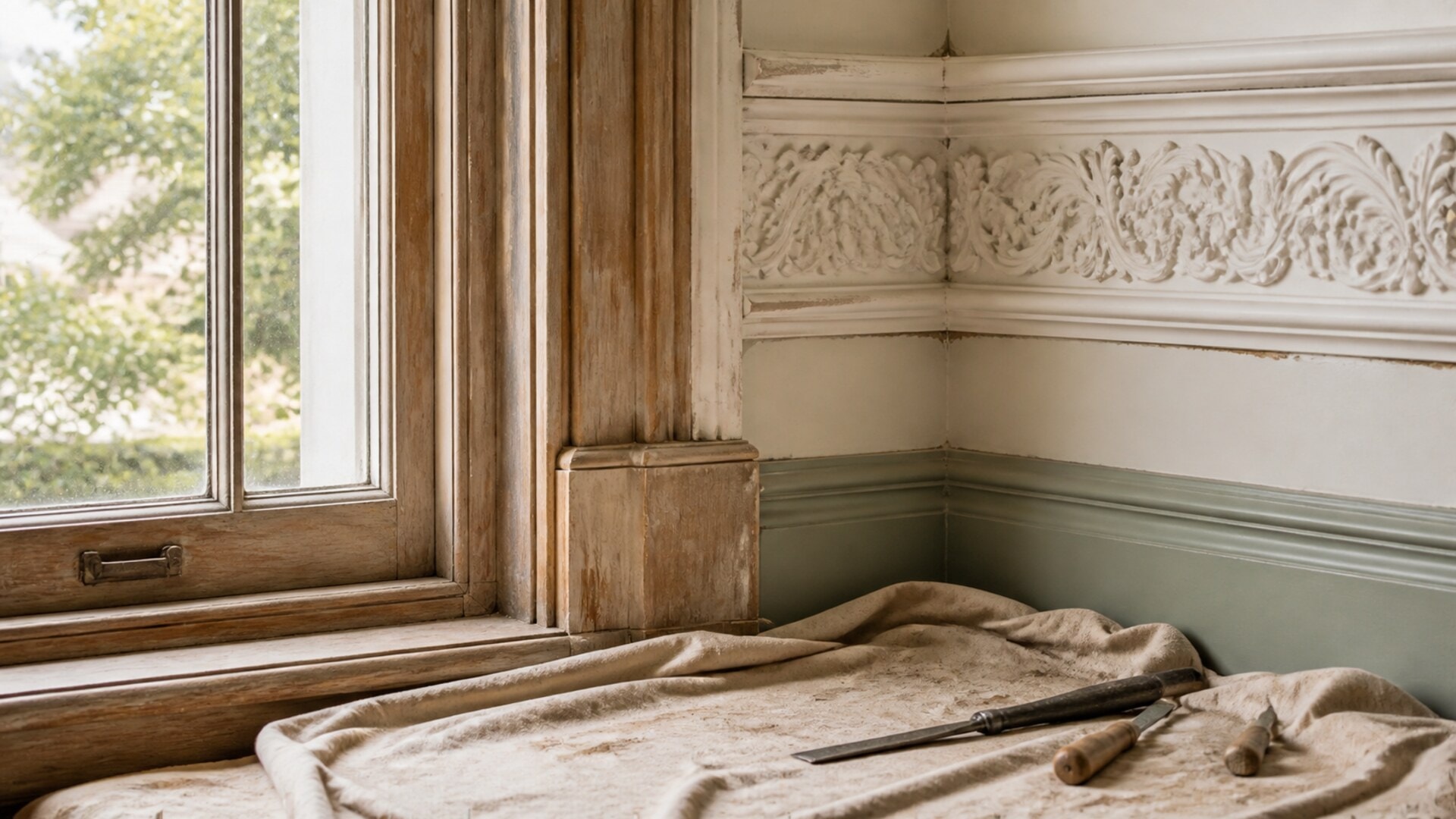
Original windows, fireplaces, doors, timber work, plaster details, masonry and floorboards can give an older home its character. Keeping them is not always a matter of leaving them untouched. Many need careful repair, protection or adaptation so they can continue to work within the renovated home.
The best approach begins with deciding what matters and understanding the condition of each feature.
Make a record of the features you value
Walk through the home with your designer or heritage adviser and identify the elements you hope to keep. Photograph them and note their location, condition and any obvious damage.
In a listed property, the approval may also identify features that must remain, be repaired or be reinstated. Bring the personal and formal priorities into one schedule so the builder knows what each item means to the project.
The schedule should distinguish between an item that stays in place, one removed temporarily for repair and one replaced under an agreed detail.
Understand the cause before repairing the symptom
Peeling paint, a sticking window or cracked plaster may be the visible sign of a different problem. Moisture, movement, failed flashings, decayed timber or an earlier unsuitable repair can all sit behind the surface.
Ask the appropriate adviser or specialist to assess important damaged fabric. A good repair deals with the source of the problem as well as the visible result.
This is particularly important when several materials meet. Replacing one element without understanding the surrounding wall, sill, roof or drainage can allow the damage to return.
Repair or replace?
Repair can retain more original material and character. It may involve splicing timber, re-fixing loose components, carefully patching plaster or rebuilding a local section of masonry.
Replacement may be necessary when an item cannot perform safely, is too deteriorated to repair or conflicts with an approved functional requirement. The replacement should follow the project advice for its material, profile and appearance.
Avoid deciding that every old item is beyond repair before it has been assessed. At the same time, do not assume everything can remain untouched when the renovation needs new structure, services or weather protection.
Protect features before demolition starts
Original details are most vulnerable when heavier work begins around them. Dust, water, vibration and impact can damage a feature that survived for decades.
Items staying in place may need covers, temporary enclosures or restricted access. Features removed for repair should be labelled, stored securely and tied to a clear reinstatement location.
Protection needs to be part of the construction plan and price. It is difficult to add after demolition has already exposed the item.
Use materials that suit the existing building
Timber species, profiles, masonry, mortar, plaster and coatings affect both appearance and performance. A modern product is not automatically suitable because its colour looks similar.
The replacement or repair material needs to work with the existing fabric. For example, a very hard repair beside softer masonry can shift stress or trap moisture rather than solve the problem.
Heritage NSW publishes practical maintenance information, including guidance on timber repairs. Project-specific advice should still guide the actual feature and home.
Bring modern comfort around the old details
Retaining character does not mean leaving the home uncomfortable. New kitchens, bathrooms, lighting, heating, cooling and storage can be introduced around important fabric.
Service routes and fixing points need thought. Cutting through a decorative ceiling or original timber panel for a late service decision can undo careful restoration work elsewhere.
Coordinate the modern changes with the retained features so both feel intentional.
Expect some discoveries during the work
Later paint, linings and previous repairs can hide the full condition. When something new is uncovered, record it and ask the relevant person to assess the repair approach before related work continues.
The contract should distinguish between known repair work and a condition that could not reasonably be confirmed earlier. This gives the owner and builder a clear way to discuss the effect on method, cost and timing.
Give each feature a clear outcome
By the time construction begins, the team should know which items are protected, repaired, removed, stored, reinstated or replaced. Photographs, condition notes and agreed details make that outcome easier to follow through the build.
Sydney Custom Builders carries out heritage home restoration and renovation across Sydney. Tell us which parts of the home matter to you and what you would like to change around them. You can also read about heritage renovation approvals and the wider approach to renovating an older home.
Sydney Custom Builders
Licensed Sydney Builder
Sydney Custom Builders builds custom homes, major renovations and extensions across Sydney. These guides share practical advice for homeowners planning a building project.