Sydney Custom Builders
4 min read
Key Takeaways
- Staying works best when living areas, access and services can remain genuinely separate from construction.
- Plan around the real loss of kitchens, bathrooms, power, privacy and normal household routines.
- Keep a realistic place to go if weather, hidden conditions or service work changes the arrangement.
Living at home during a renovation can sound convenient: no second rent, no full move and the ability to see the work taking shape. In practice, it can also mean weeks or months of noise, dust, changed access and rooms that cannot be used.
Some households manage it well. For others, moving out is safer and far less stressful. The right answer depends on the scale of work and whether a genuinely separate living area can be maintained.
Start with the parts of the home being changed
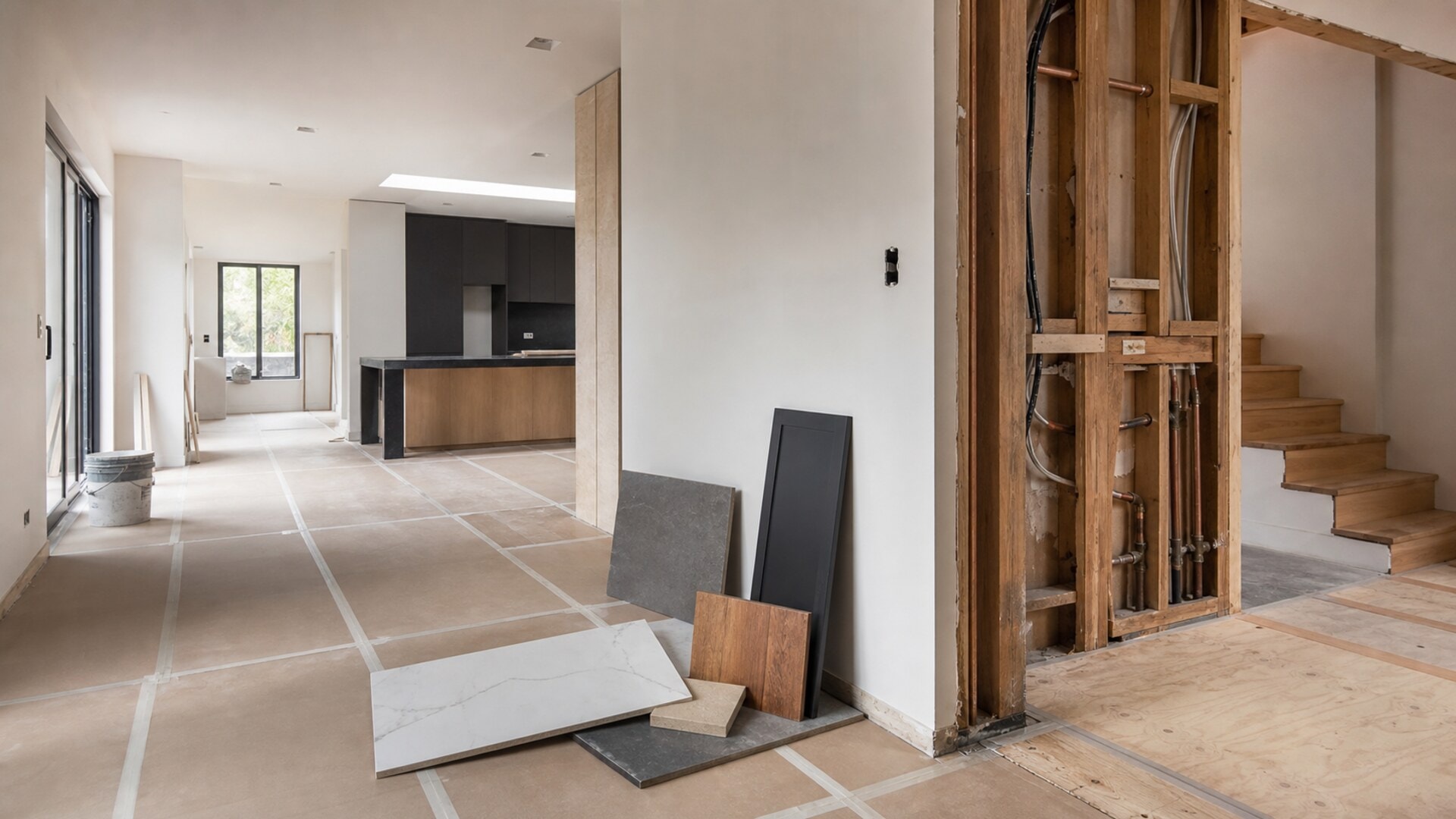
An isolated bathroom or rear extension is different from a renovation that opens the roof, removes internal walls or affects most of the services. Mark the construction zone and ask what sits between it and the rooms you hope to keep using.
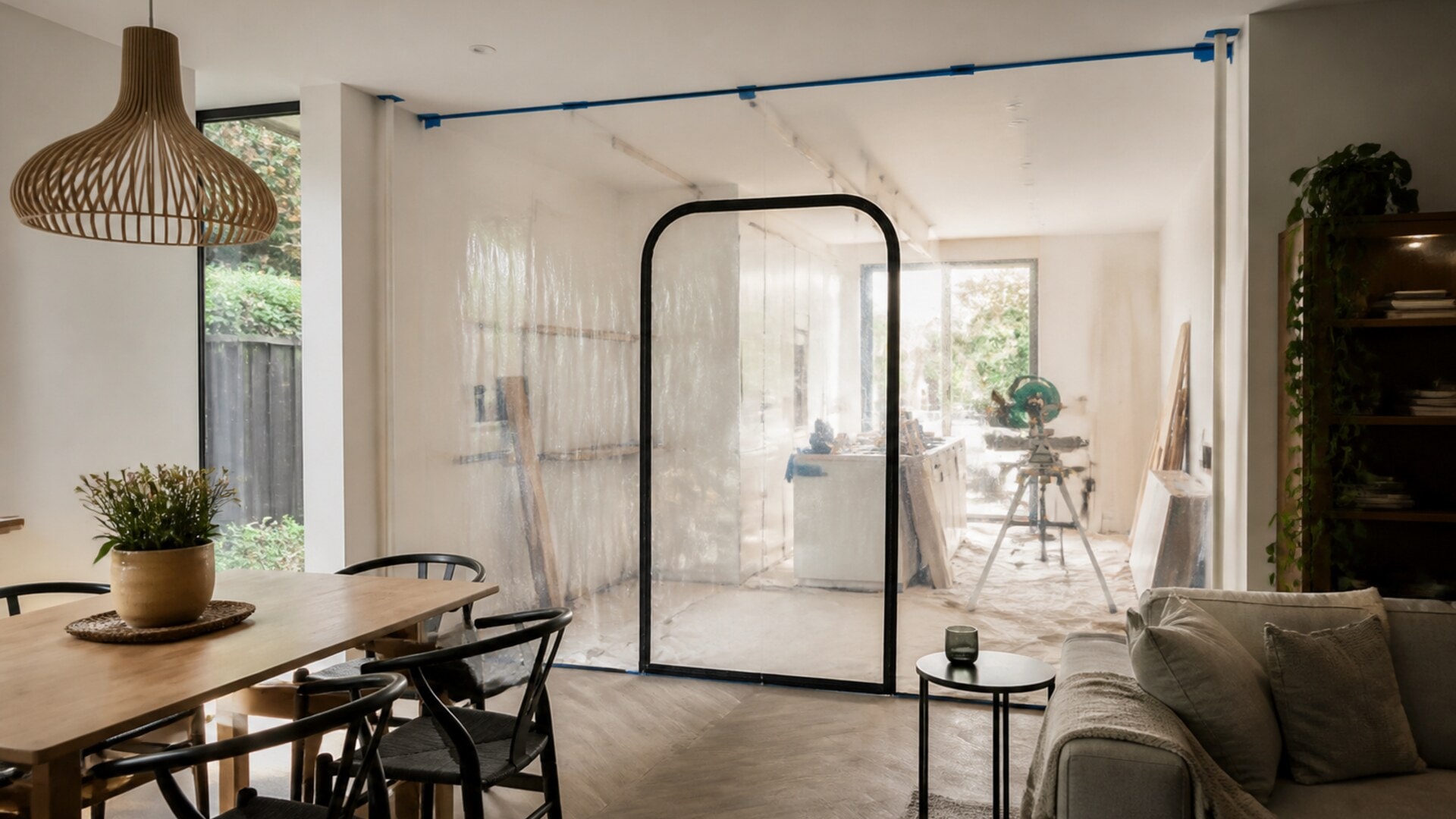
A closed door may be enough for minor work, but it is not a reliable boundary from major demolition, tools and incomplete building areas. The occupied part of the home needs to remain secure, weatherproof and separate from the site.
If trades must pass through your living area or the work affects the only safe entrance, staying may not be practical even when several rooms remain untouched.
Be realistic about kitchens and bathrooms
Losing the only kitchen or bathroom has a greater effect than most people expect. A microwave and kettle may cover a few meals, but longer periods require somewhere safe to prepare food, wash dishes and store supplies.
A temporary bathroom arrangement also needs privacy, hot water, drainage and safe access. If the only toilet or shower will be unavailable, moving out for that stage may be the simpler option.
Ask how long the room is expected to be out of use, but allow for the fact that hidden conditions or product delays can change the sequence.
Plan for interruptions to services
Water, electricity, gas, drainage, heating, cooling and internet may need to be isolated or changed. Some shutdowns are short; others affect a larger part of the home while new work is connected.
Discuss which services are likely to be interrupted and whether a temporary arrangement is both safe and worthwhile. Working from home can become difficult when power, internet, noise and privacy are all affected at once.
Give the household and builders separate access
Construction needs space for people, deliveries, tools, materials and waste. The household needs a route that does not cross stored materials, active work or open ground.
Think about gates, shared driveways, parking, bins and the path used by children, visitors or carers. A clear separation makes everyday life safer and helps the building team work without constantly moving household items or stopping access.
Expect dust and noise despite good protection
Barriers, extraction and cleaning can reduce dust, but major building work will not feel like normal life. Demolition, cutting, drilling and deliveries create noise and vibration. Doors open, trades move through the site and weather can affect how well areas stay sealed on a particular day.
Anyone with respiratory concerns, sensory needs, shift work or frequent video calls should factor that into the decision. Protection can control the site; it cannot make the experience silent or dust-free.
Make a clear plan for children and pets
Children and pets need to stay out of the building zone even after trades leave. Materials, tools, temporary fencing and unfinished surfaces can remain on site overnight.
Decide who is responsible for gates and doors, where pets will stay and whether normal play areas will still be available. If those arrangements are difficult to maintain for the length of the job, temporary accommodation may be the better choice.
Understand what staging adds
Dividing a renovation into stages can keep a bedroom, bathroom or kitchen available for longer. It may also mean temporary walls, repeated protection, services moved more than once and trades returning to areas they could otherwise complete together.
Ask how each stage connects to the next and whether completed rooms will need to be disturbed later. Our whole-home renovation planning guide helps bring those decisions together.
Have somewhere else you can go
Even when the plan is to stay, keep a realistic fallback. Unexpected damage, weather exposure or a longer service interruption may make the house unsuitable for a few days or weeks.
Knowing where you, children and pets can go removes pressure from decisions made in the middle of the job. It also allows the builder to deal with a genuine site issue without trying to preserve an arrangement that is no longer workable.
Talk about occupation before the build is planned
Tell the builder early if you hope to stay in the home. The decision affects access, protection, staging and temporary work, so it should be part of the project rather than an arrangement added later.
Sydney Custom Builders carries out major home renovations across Sydney. Tell us which parts of the home are changing and how you expect the household to live during the work. We can discuss whether an occupied renovation is practical for the project, alongside the factors that shape the renovation budget.
Sydney Custom Builders
Licensed Sydney Builder
Sydney Custom Builders builds custom homes, major renovations and extensions across Sydney. These guides share practical advice for homeowners planning a building project.